





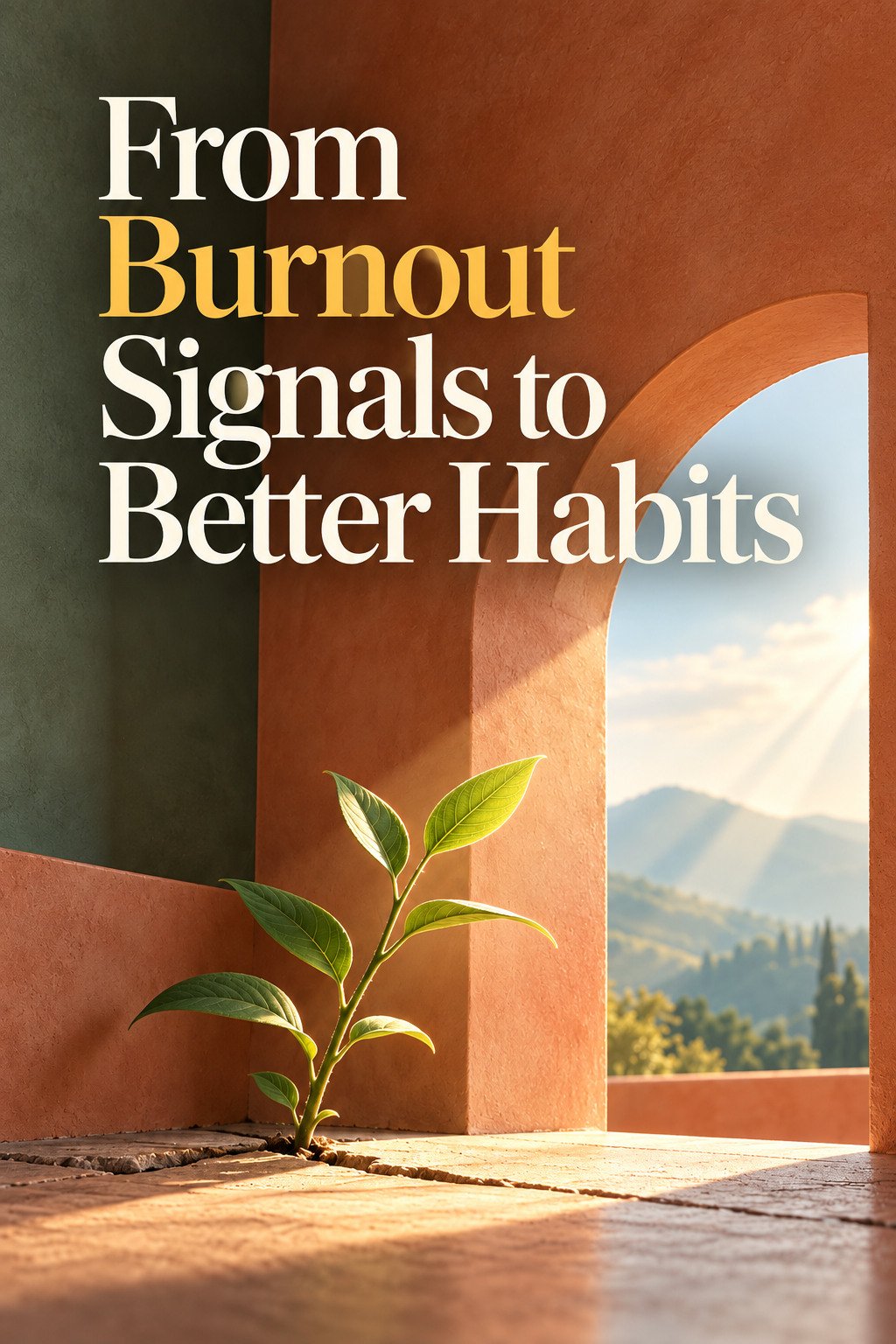
From Burnout Signals to Better Habits
From Burnout Signals to Better Habits is a practical guide to well-being and reflection for doctors. Explore a reflection workbook for sustainable practice, reflect on situations from your own professional life, and identify realistic actions you can adapt to a demanding medical work setting.
Description
This reflective workbook helps doctors pay attention to patterns in workload, energy, and professional satisfaction. It is not a diagnostic tool or a substitute for appropriate support. Instead, it offers prompts to help you describe what has changed, identify factors within your influence, and prepare a conversation with a trusted colleague, supervisor, or support service.
What this guide is about
A Reflection Workbook for Sustainable Practice frames a focused opportunity to think about your professional development. The aim is not to offer a universal formula or promise instant change. Instead, the guide helps you examine choices and working patterns in context, connect them to your own priorities, and decide which next steps are worth exploring.
What you’ll explore
- Map pressures and sources of support. This perspective helps you make choices with greater awareness of context. You can adapt the idea to your responsibilities, experience, and workplace, then review whether it is useful instead of treating one approach as universally right.
- recognize changes in work patterns. A small, deliberate next step can make an abstract development goal easier to act on. Keep it proportionate to your available time, notice what you learn from trying it, and adjust when your circumstances or priorities change.
- identify one or two practical experiments. Use this as a starting point for noticing what is happening in your day-to-day work, rather than as a demand to change everything at once. A specific observation gives you something concrete to discuss, test, or revisit later.
- prepare a constructive conversation about workload.. The aim is to translate a broad intention into language and actions that are practical in a real clinical environment. Consider what is within your influence, what depends on colleagues or systems, and what support would make progress more realistic.
A practical way to use the guide
Begin with a situation that is familiar and manageable. Describe what happened, what mattered to you, and what you would like to understand better. Separating observation from interpretation can make reflection more useful and help you identify questions worth exploring.
Next, look for patterns across more than one moment. Notice what tends to help, what creates friction, and which factors sit within your control. This broader view can prevent a single difficult day from defining your judgement about your skills or career.
Then choose one experiment that is small enough to try in the conditions you actually face. Define what you will do, when you might do it, and how you will tell whether it helped. Keep the plan flexible so it can accommodate unpredictable clinical demands.
Who this guide is for
Doctors who want a structured way to reflect on work-related strain and possible next steps. It may be useful whether you are taking a first step in this area or reviewing habits and goals you have considered before. You do not need to have a fully formed plan before you begin; curiosity about one question or challenge is enough to get started.
Make the ideas work for your context
You can work through the material in one sitting or return to it in short sessions. Many readers may find it helpful to keep a private journal, use the prompts before a supervision or mentoring conversation, or revisit a chosen action after a few weeks.
The resource is designed for individual reflection and can also support a discussion with a trusted colleague, mentor, supervisor, or team. Share only what feels appropriate for your setting, and follow your organisation’s policies when a topic involves patient care or workplace processes.
From Burnout Signals to Better Habits is intended as an educational and reflective resource for personal and professional development. It does not replace clinical guidance, organisational policy, medical care, or professional support. Use your judgement about what is appropriate in your workplace, and seek relevant help when a situation calls for it.
Reviews
There are no reviews yet.